
Building Your Ballet Portfolio: How Serious Dancers Go from Studio Training to Professional Stage
If your child is serious about ballet — not as a hobby, not as a weekend activity, but as a possible career — then you've probably already started asking the harder questions. Talent alone isn't the answer. Every serious dancer has talent. What separates the ones who build a real career is something else: a documented, verifiable record of professional-level experience, built over years, in the right environments.
That's what a performance portfolio is. And it doesn't come from taking classes. It comes from performing in productions where the standard is professional, where the stage is real, and where the people watching — teachers, directors, program selectors — can see exactly what your child has done and where they were trained.
Talent gets you into the room. Your portfolio tells the people in that room whether you belong there.

A note to the dancers reading this:
If you're 13, 14, 15 and already thinking about whether this could be a real career — you're thinking at exactly the right time. Most dancers who make it didn't decide to get serious at 18. They started building their record long before anyone else was watching. This is what that process looks like.
What a Ballet Portfolio Actually Is
A portfolio in ballet isn't a folder of certificates or a list of classes attended. When a director at a national ballet school, a summer intensive program, or a professional company looks at a young dancer's background, they're asking a specific set of questions:
Where did you train, and under which method?
Who taught you?
Where have you performed, and at what level?
What roles have you held?
Can I see it — on video?
The answers to those questions are your portfolio. It's built in real time, through real performances. No course or workshop substitutes for it.
This is the distinction that matters most for families comparing training options in the GTA: not every studio gives a student access to productions that belong on a professional résumé. Most don't.
What Goes Into a Strong Portfolio
Here are the components that actually move the needle when a selector is reviewing a young dancer's background:
Portfolio Element | What It Demonstrates | Priority |
Professional stage productions (The Nutcracker) | Verified stage credit at a professional venue alongside international artists | Essential |
Video recordings of performances | Primary submission material for auditions to schools and companies | Essential |
Training lineage (Vaganova Method, Bolshoi-trained instruction) | Tells selectors where your technique comes from — and whether it holds up | Essential |
Competition results | Adds an objective benchmark; not required, but strengthens the profile | Essential |
Letters of recommendation from professional faculty | Especially valuable for applications to national programs and international schools | Essential |
Of these, training lineage deserves a direct word. Where you learned — and from whom, and in which method — tells an informed selector a great deal before they've watched a single second of video. A student trained in the Vaganova Method under a faculty with direct Bolshoi Academy lineage is signaling something specific: a structured, technically rigorous approach to classical ballet that is internationally recognized and consistently produces dancers who can hold positions in professional companies.
This isn't generic marketing language. The Vaganova Method, developed at the Vaganova Ballet Academy in St. Petersburg, is the foundation of Russian classical training and remains one of the most demanding and respected technical systems in the world. When a program director sees it listed, they know what it means.
The Vaganova Method isn't a style preference. It's a complete technical system that professional companies around the world know and respect.

Why Training at SBA Reads Differently
Stepanova Ballet Academy was founded by Tatiana Stepanova, a graduate of the Bolshoi Ballet Academy in Moscow who performed as a Principal Dancer with the Odessa State Ballet Company before dedicating herself to training the next generation of professional dancers in Canada.
That lineage matters. It means that the instruction SBA students receive isn't a local interpretation of classical technique — it's the real thing, taught by someone who trained within the system, performed at the professional level, and brought those standards to Thornhill.
When an SBA student lists their training background, what they're presenting to a selector is this:
Vaganova Method — one of the world's most rigorous classical training systems
Instruction from a Bolshoi Ballet Academy graduate
A structured, ability-based curriculum with progressive levels from beginner to pre-professional
A direct pipeline to professional stage experience through Toronto International Ballet Theatre
That last point is where the portfolio actually gets built.
The Nutcracker Is Not a School Recital
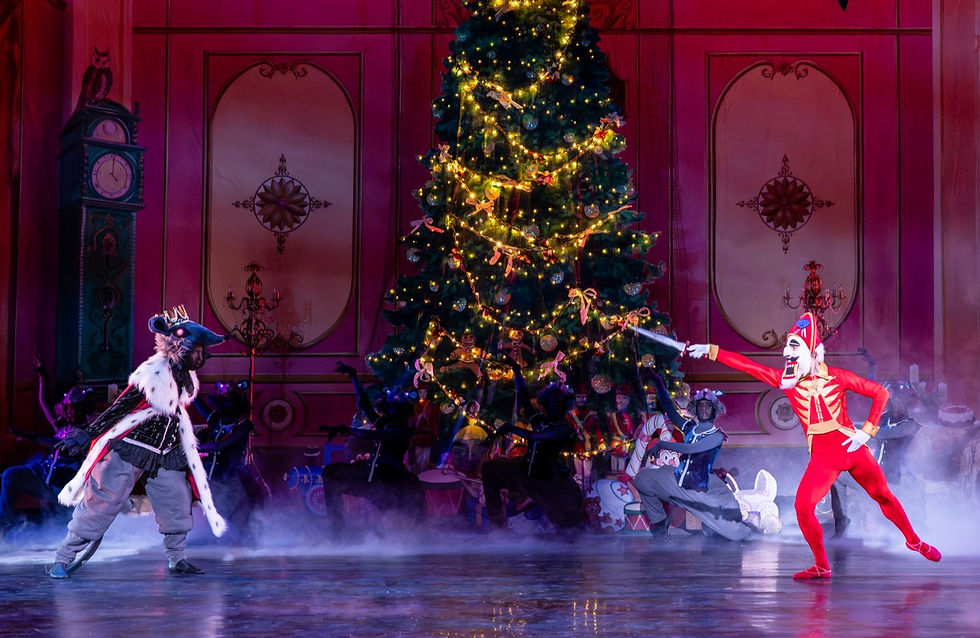
Toronto International Ballet Theatre was founded in 2008 by Tatiana Stepanova with one purpose: to give serious young dancers the professional stage experience that a studio simply cannot provide. Toronto International Ballet Theatre (TIBT) has performed at Meridian Hall, Toronto Centre for the Arts, John Bassett Theatre, and Bluma Appel Theatre. Its productions pair emerging local dancers with internationally acclaimed guest artists — including Principal dancers from the Bolshoi Ballet.
The Nutcracker, which TIBT has produced across seventeen consecutive seasons, is the entry point for SBA students into this environment. Positions are auditioned. Paid roles are available for professional dancers. The performance is assessed, rehearsed, and presented to a professional standard because it is a professional production.
When an SBA student performs in the TIBT Nutcracker, what goes onto their résumé isn't "performed in school show." It's a named professional company, a landmark Toronto venue, and a production that has run for seventeen seasons alongside Bolshoi principals. That is a different entry entirely — and it reads as such.
Performing alongside a Bolshoi Ballet principal dancer at 15 is not a school experience. It's the beginning of a professional record.
The Path: From Classical Training to Professional Stage
For a serious student at SBA, the progression isn't accidental. It's structured:
Classical Ballet at SBA Vaganova Method, Bolshoi-trained faculty | → | Professional Program Intensive coaching, daily training | → | TIBT Audition (age 15+) Professional venue | → | Performance Credit Resume line, video record |
Each stage builds directly on the previous one. Classical Ballet training at SBA instills the technical foundation — correct alignment, Vaganova-method barre and centre work, musicality, and the discipline that professional environments require. The Professional Program adds intensive daily training, personalized coaching, and direct exposure to industry standards.
This is a system. It doesn't happen automatically, and it requires consistent work over years. But it exists, it's real, and it produces dancers who have gone on to professional careers in companies across Europe and North America.
What to Do Right Now
For parents:
Ensure your child is in a structured program with a clear technical progression, not a general "dance class."
Document from day one: every performance, keep programs, record the names of teachers and the productions they've been part of.
Ask directly about the school's connection to professional performance opportunities. If the answer is vague, that's your answer.
Understand that training lineage matters. Vaganova Method instruction from a Bolshoi-trained teacher is a specific, verifiable credential — not a marketing claim.
For dancers:
Every production you perform in is a record. Treat it as one. Keep your own log: the company, the venue, the role, the date.
Video is non-negotiable. Get quality footage of every performance. You will need it.
Ask your teachers where the training you're doing leads. They should have a clear answer. If they don't, that's information.
Seriousness at 14 is not too early. It's exactly the right time. The dancers you'll be competing against at 17 started at 13.
What Makes an SBA Student Stand Out to Program Selectors
|
Take the Next Step
Training at Stepanova Ballet Academy means training in a system that professional selectors recognize. If you or your child are serious about a ballet career, this is where that career begins.


Comments